 Translate

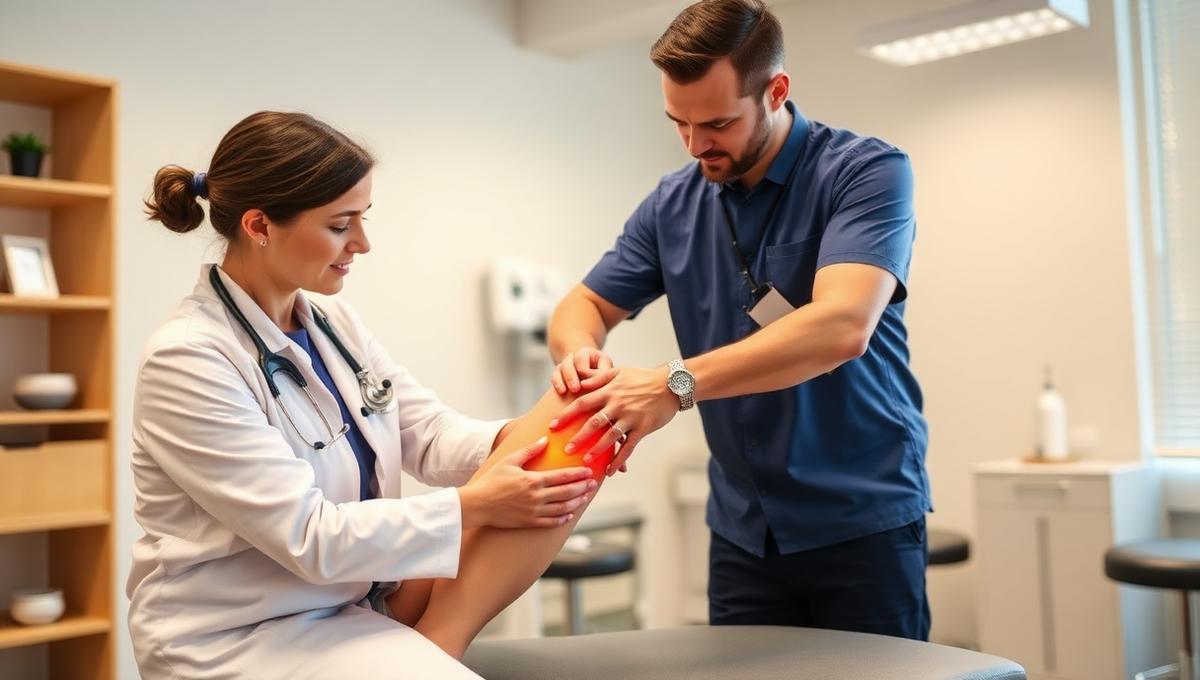
Knee pain doesn't have to sideline your active Lenexa lifestyle. Learn how Dr. Meylor's whole kinetic chain approach at Meylor Chiropractic addresses the root cause of knee pain — not just the symptoms — so you can get back on the trails, the court, and into everyday life.
Lenexa is not a sit-still kind of city. Between the trails at Sar-Ko-Par Park, the Santa Fe Trail corridor, the weekend 5Ks, the rec league soccer and basketball, and the thousands of residents who simply make running and cycling part of their daily routine, this is a community that moves. And when your knee starts hurting, that matters — because in Lenexa, knee pain isn't just a physical inconvenience. It's something that cuts you off from the lifestyle you've built.
At Meylor Chiropractic and Acupuncture in Lenexa, Dr. Meylor works with active patients dealing with knee pain from every angle — runners, cyclists, weekend athletes, parents chasing toddlers, and older adults dealing with the cumulative wear of decades of movement. The approach is rooted in finding why the knee is breaking down, not just treating where it hurts. Because in most cases, the knee itself is the victim — not the cause — and the real problem is somewhere up or down the kinetic chain.
If you've been managing knee pain with ice packs, ibuprofen, and modified activity, and you're ready to actually fix it, this is what that looks like at Meylor Chiropractic in Lenexa.
Why Knee Pain Is So Common in Active Communities Like Lenexa
The knee is the most frequently injured joint in the body among physically active people, and for good reason. It's a hinge joint — designed primarily for flexion and extension — that is constantly being asked to handle rotational forces, lateral stress, and impact absorption that its structure wasn't purely designed for. It manages those demands reasonably well when everything above and below it is functioning correctly. When it isn't, the knee pays the price.
Lenexa's running and outdoor culture means that overuse injuries are particularly common here. The trails at Sar-Ko-Par Park, while beautiful and well-maintained, involve terrain changes and elevation that load the knee differently than flat pavement. Runners who increase mileage too quickly, cyclists who haven't properly fit their bikes, and weekend athletes who go hard on Saturday without adequate preparation during the week all show up at Meylor Chiropractic with the predictable consequences.
But overuse isn't the only story. Age-related joint degeneration, previous injuries that were never fully rehabilitated, and biomechanical patterns that have been quietly stressing the knee for years all contribute to the chronic knee pain that affects a significant portion of Lenexa's adult population — active and sedentary alike.
The Most Common Knee Conditions Treated at Meylor Chiropractic
[Runner's Knee (Patellofemoral Pain Syndrome)](https://orthoinfo.aaos.org/en/diseases--conditions/patellofemoral-pain-syndrome)
Runner's knee is the most common knee complaint among the running community in Lenexa and throughout Johnson County. It describes pain at or around the kneecap — particularly with downhill running, stair descent, prolonged sitting, or squatting — caused by poor patellar tracking as the kneecap moves through its groove on the femur.
Despite the name, runner's knee isn't a knee problem at its root. It's almost always driven by weakness in the hip abductors and external rotators — specifically the gluteus medius — that allows the femur to internally rotate under load, changing the mechanics of how the patella tracks. Add tight quadriceps and iliotibial band tissue that pulls the kneecap laterally, and you have a recipe for the chronic anterior knee pain that sidelines so many Lenexa runners.
Treating the kneecap without addressing the hip is why runner's knee keeps coming back. Dr. Meylor's approach addresses both.
IT Band Syndrome
The iliotibial band is a thick band of connective tissue running from the hip down the outside of the thigh to the lateral knee. In runners and cyclists — two groups well-represented in Lenexa's active community — the IT band can become chronically tight and irritated where it crosses the lateral femoral epicondyle, producing a sharp, burning pain on the outside of the knee that typically appears at a predictable point in a run and worsens progressively.
IT band syndrome is notoriously resistant to foam rolling and stretching alone because the IT band itself is not a muscle — it can't be lengthened through conventional flexibility work. The real driver is almost always hip weakness and altered pelvic mechanics that increase the tension through the IT band with every stride. Addressing those upstream contributors — through chiropractic alignment of the pelvis and lumbar spine alongside targeted hip strengthening — is what actually resolves IT band syndrome rather than just temporarily managing it.
Patellar Tendinopathy
Patellar tendinopathy — chronic irritation and degeneration of the patellar tendon connecting the kneecap to the tibia — is the overuse injury of jumping sports, hill running, and any activity that repeatedly loads the knee in a bent position under tension. It's common in Lenexa residents who play basketball, volleyball, or tennis, and in runners who do significant hill work on the trails around Sar-Ko-Par Park.
Patellar tendinopathy responds to a combination of load management, manual therapy to the tendon and surrounding soft tissue, and addressing the mechanical factors — typically quad dominance, hip weakness, and altered foot mechanics — that are overloading the tendon in the first place.
Knee Osteoarthritis
Knee osteoarthritis is the age-related breakdown of articular cartilage that affects a significant portion of Lenexa residents over fifty. It produces aching, stiffness, swelling, and progressive loss of function that conventional medicine typically manages with anti-inflammatory medication, cortisone injections, and eventual joint replacement.
What conservative chiropractic care offers for knee osteoarthritis is not reversal of cartilage loss — that isn't possible. What it offers is meaningful reduction in pain and improvement in function through better joint mechanics, reduced inflammatory load, and strengthening of the muscles that offload stress from the arthritic joint surface. Many patients in Lenexa who come to Meylor Chiropractic with knee osteoarthritis are able to delay or avoid joint replacement and maintain an active lifestyle well beyond what they expected when they received the diagnosis.
Post-Injury and Post-Surgical Knee Conditions
Whether you've sprained your ACL on the soccer field, torn a meniscus during a weekend hike, or already had knee surgery and aren't where you expected to be in recovery, structured chiropractic and rehabilitative care provides a meaningful path forward. Dr. Meylor works with post-injury and post-surgical knee patients to restore mobility, rebuild strength, correct compensatory movement patterns, and guide a safe return to the activities that matter to them in Lenexa.
The Role of Spinal and Hip Alignment in Knee Pain
This is the piece of the puzzle that most knee pain sufferers in Lenexa have never been told about — and it's central to the way Dr. Meylor approaches lower extremity conditions.
Your knee doesn't operate independently. Every time you take a step, force travels up from the ground through your foot and ankle, through your knee, through your hip, and into your pelvis and lumbar spine. It also travels in reverse — altered mechanics from above influence what happens at the knee just as powerfully as anything originating in the joint itself.
Pelvic misalignment is one of the most common upstream contributors to knee pain that Dr. Meylor identifies in Lenexa patients. When the pelvis is rotated or tilted, it changes the angle at which the femur sits in the hip socket, altering the tracking of the knee through every stride. A lumbar subluxation can affect the nerve roots that control the muscles surrounding the knee — specifically L3 and L4, which innervate the quadriceps, and L5 and S1, which govern the hamstrings and calf musculature. When those nerve roots are compromised, the muscles they control don't fire with full efficiency, and the knee loses the dynamic support it depends on.
Foot and ankle mechanics matter equally. Excessive pronation — the inward rolling of the foot — drives internal rotation of the tibia and creates a valgus stress at the knee that directly contributes to patellofemoral pain, IT band syndrome, and medial knee breakdown. Dr. Meylor evaluates foot mechanics as part of every lower extremity assessment, because treating the knee without assessing the foot is treating half the problem.
This full kinetic chain perspective — from lumbar spine to foot — is what makes chiropractic care for knee pain at Meylor Chiropractic in Lenexa different from isolated knee treatment.
What Treatment Looks Like at Meylor Chiropractic and Acupuncture
Chiropractic Adjustment
Spinal and pelvic adjustments correct the upstream alignment issues that contribute to abnormal knee loading. Extremity adjustments to the knee, hip, and ankle joints restore proper joint mechanics locally. For many knee pain patients in Lenexa, the combination of lumbar and pelvic correction with direct knee and hip adjustment produces rapid improvement in both pain and function.
Acupuncture
Acupuncture is a powerful complement to chiropractic care for knee pain — particularly for patients dealing with chronic inflammation, stubborn soft tissue tension, or pain that hasn't responded fully to manual therapy alone. By stimulating specific points along the meridians associated with the knee and lower extremity, acupuncture modulates pain signaling through neurological pathways, reduces local inflammation, and supports the healing environment in chronically irritated tissues. For Lenexa patients dealing with knee osteoarthritis, IT band syndrome, or patellar tendinopathy, acupuncture frequently provides relief that accelerates the overall recovery process.
Soft Tissue Therapy
Manual soft tissue work — including myofascial release, instrument-assisted soft tissue mobilization, and trigger point therapy — addresses the muscular and fascial restrictions that develop around chronically painful or injured knees. The quadriceps, IT band, hamstrings, calf, and hip musculature all require attention in most knee pain presentations, and releasing soft tissue restrictions is essential before strengthening work can be fully effective.
Targeted Rehabilitation
Progressive strengthening of the hip abductors, external rotators, quadriceps, and hamstrings — addressing the specific deficits identified in each patient's evaluation — provides the long-term stability that keeps the knee pain from returning. Dr. Meylor builds individualized exercise progressions that fit each patient's current capacity and activity goals, from getting back on the trails at Sar-Ko-Par Park to returning to competitive sport.
Getting Back to Lenexa Life: Return-to-Activity Expectations
The question every active Lenexa patient asks is some version of: when can I run again? The honest answer depends on the condition, its severity, and how long it's been present — but here's a realistic framework:
Runner's knee and IT band syndrome — With consistent care addressing both the local knee mechanics and the hip and pelvic contributors, most patients see significant improvement within four to eight weeks and return to full running within two to three months.
Patellar tendinopathy — Chronic tendinopathy requires patience. Meaningful improvement typically takes six to ten weeks of consistent treatment and load management, with full return to unrestricted activity at three to four months for established cases.
Knee osteoarthritis — Ongoing conservative management can maintain function and reduce pain indefinitely. Most patients notice meaningful improvement within the first four to six weeks of care.
Post-surgical rehabilitation — Timelines vary by procedure, but structured chiropractic rehabilitation consistently produces better outcomes than unguided recovery, with most patients achieving functional goals within three to six months of beginning care.
Ready to Get Back to Moving in Lenexa?
Meylor Chiropractic and Acupuncture has been helping active Lenexa residents reclaim their movement — on the trails, on the court, and in everyday life — with a root-cause approach that addresses the whole kinetic chain, not just the painful joint. If knee pain has been slowing you down in Lenexa, the first step is finding out why it's happening.
Find Us in Lenexa
Meylor Chiropractic and Acupuncture is located at 12980 W 87th St Pkwy, Lenexa, KS 66215 — convenient to active residents throughout Lenexa and the surrounding Johnson County communities.
Meylor Chiropractic and Acupuncture 12980 W 87th St Pkwy, Lenexa, KS 66215 (913) 227-0909 meylorchiro.com
Serving active residents throughout Lenexa and Johnson County with chiropractic, acupuncture, and rehabilitative care.
